60 Results for "

Erythrina subumbrans (Hassk.) Merr.

" in MedChemExpress (MCE) Product Catalog:
Products (60)

60 Results for "Erythrina subumbrans (Hassk.) Merr." in MCE Product Catalog:

10
10 Publications Verification
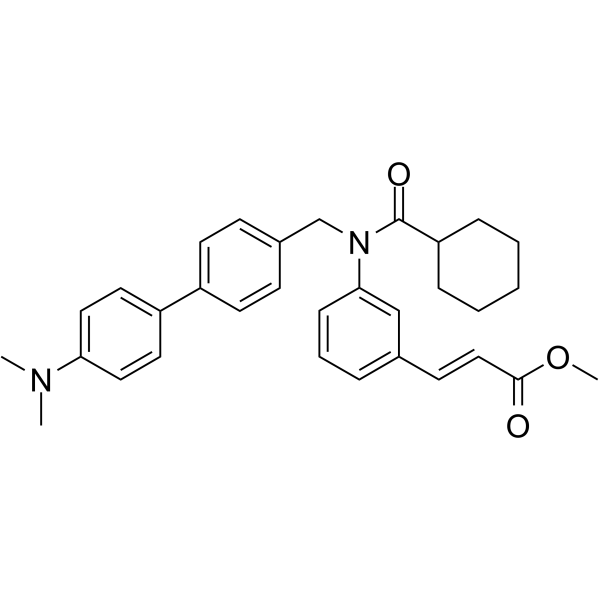
Cat. No.: HY-10912
CAS No.: 574013-66-4
Purity:  99.24%
Target:  

FXR Autophagy

Research Areas:  

Others

Fexaramine is a potent and selective FXR agonist with an EC50 of 25 nM. Fexaramine has no activity against hRXRα, hPPARαγδ, mPXR, hPXR, hLXRα, hTRβ, hRARβ, mCAR, mERRγ, and hVDR receptors .
loading...
    loading...
2
2 Cited Publications
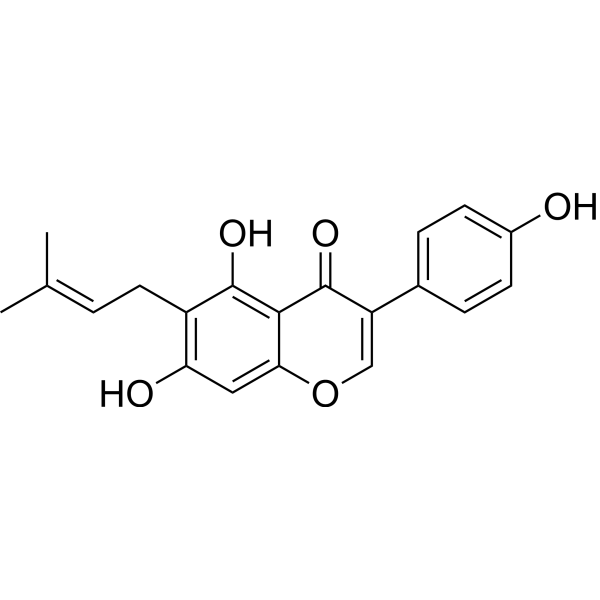
Cat. No.: HY-N1073
CAS No.: 51225-30-0
Synonyms: 6-Isopentenylgenistein; Erythrinin B
Wighteone (6-Isopentenylgenistein; Erythrinin B) is a prenylated isoflavone that acts as a HSP90/EGFR L858R/T790M inhibitor and antifungal agent. Wighteone reduces the expression level of HSP90, blocks EGF-induced phosphorylation of EGFR, and thereby inhibits the downstream ERK and AKT signaling pathways. Wighteone induces cell cycle redistribution, inhibits proliferation and triggers apoptosis in cancer cells. Wighteone can be isolated from Erythrina suberosa, and can also be induced to synthesize in Lotus japonicus under specific conditions. Wighteone can be used to study HER2-positive breast cancer, leukemia, non-small cell lung cancer with EGFR L858R/T790M mutation, and fungal infections .
loading...
    loading...
1
1 Cited Publications
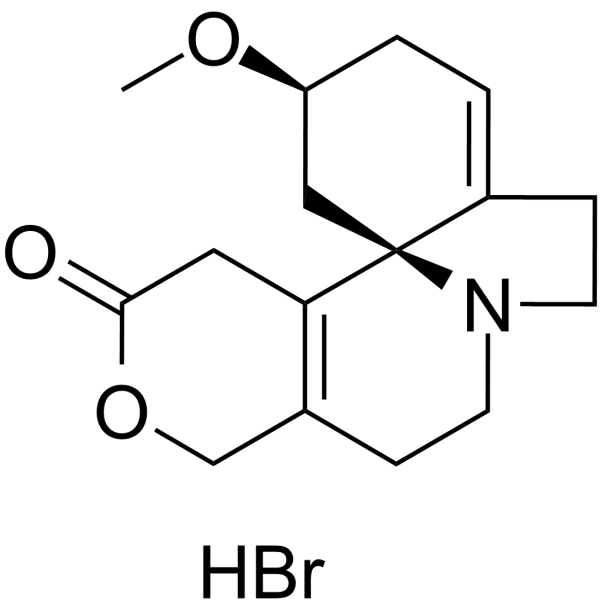
Cat. No.: HY-107670
CAS No.: 29734-68-7
Purity:  98.85%
Synonyms: DHβE hydrobromide
Dihydro-β-erythroidine (DHβE) hydrobromide is a potent, orally active, and competitive antagonist of neuronal nAChRs. Dihydro-β-erythroidine hydrobromide shows selectivity for α4β4 and α4β2 nAChRs, with IC50s of 0.19 and 0.37 μM, respectively. Antidepressant-like activities .
loading...
    loading...
1
1 Cited Publications
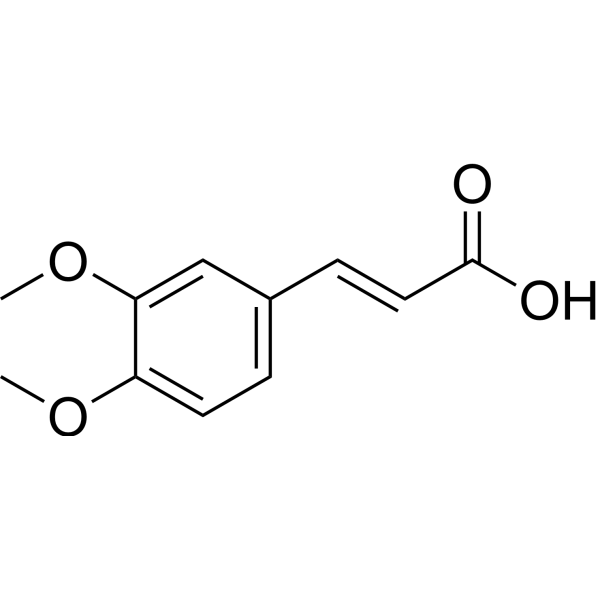
Cat. No.: HY-N1778
CAS No.: 2316-26-9
Synonyms: O-Methylferulic acid
3,4-Dimethoxycinnamic acid (O-Methylferulic acid) is a monomer extracted and purified from Securidaca inappendiculata Hassk. 3,4-Dimethoxycinnamic acid exerts anti-apoptotic effects on L-02 cells via the ROS-mediated signaling pathway . Anti-apoptotic effects .
loading...
    loading...
1
1 Cited Publications
Cat. No.: HY-N3857
CAS No.: 63807-85-2
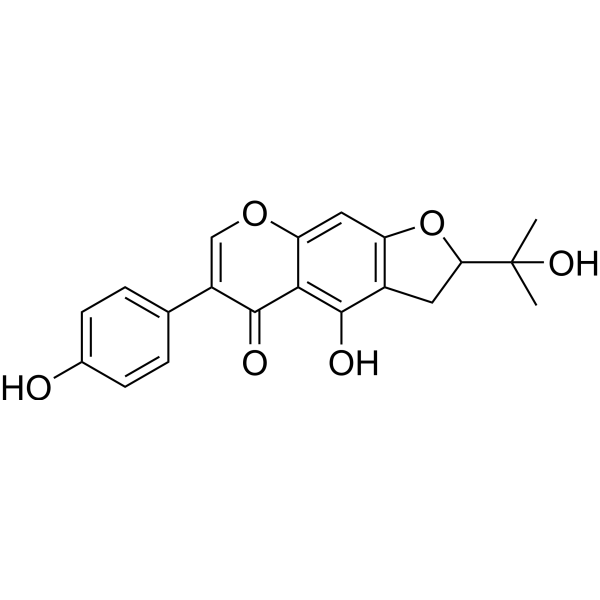
Erythrinin C is an isoflavones that can be isolated from Erythrina suberosa var .
loading...
    loading...
Cat. No.: HY-N6255
CAS No.: 108524-94-3
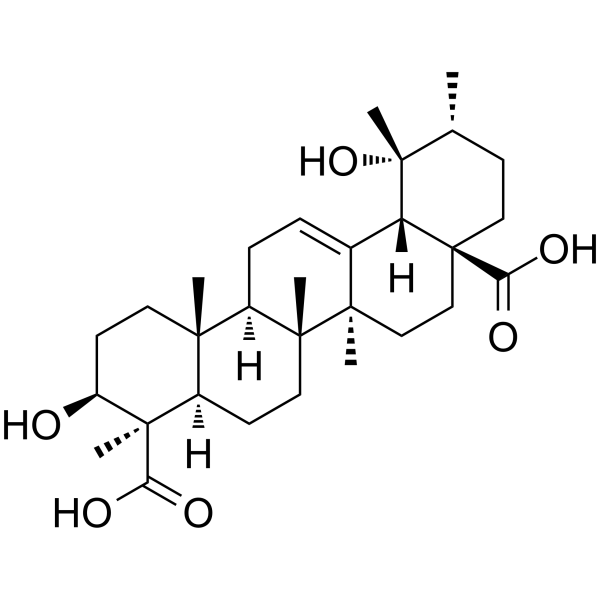
Ilexgenin A is a pentacyclic triterpenoid, which extracted from Ilex hainanensis Merr. Ilexgenin A can be used for the research of inflammation and cancer .
loading...
    loading...
Cat. No.: HY-N1653
CAS No.: 74161-25-4
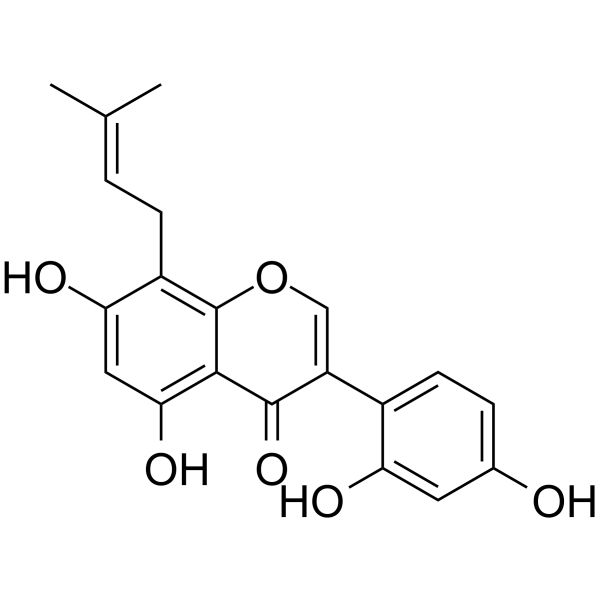
2,3-Dehydrokievitone is a isoflavanone found in Erythrina sacleuxii .
loading...
    loading...
Cat. No.: HY-117201
CAS No.: 7367-87-5
Synonyms: 3-Hydroxy octanoic acid methyl ester
Research Areas:  

Others

Methyl 3-hydroxyoctanoate (3-Hydroxy octanoic acid methyl ester) is an ester. Methyl 3-hydroxyoctanoate can be isolated from Pineapple .
loading...
    loading...
Cat. No.: HY-N2191
CAS No.: 206756-04-9
Ecliptasaponin D is a triterpenoid glucoside isolated from Eclipta alba (L.) Hassk which is the aerial part of Eclipta prostrate. Eclipta prostrate is considered as a nourishing herbal medicine with pleiotropic effects, including anti-inflammatory, hepatoprotective, antioxidant and immunomodulatory [1,2].
loading...
    loading...
Cat. No.: HY-N5040
CAS No.: 1137648-52-2
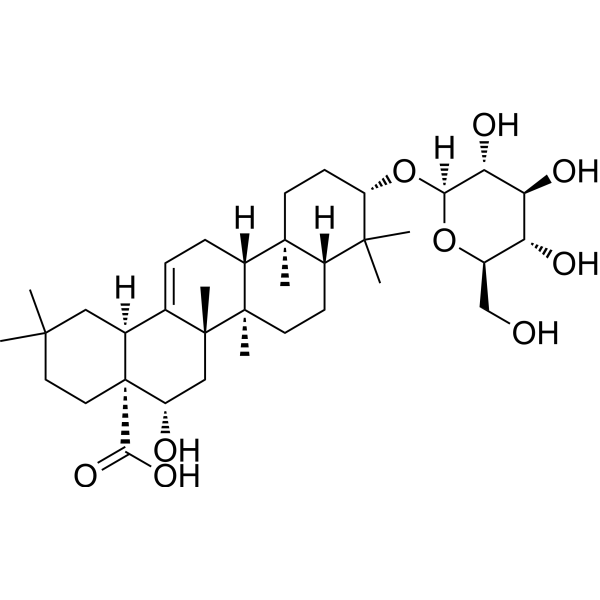
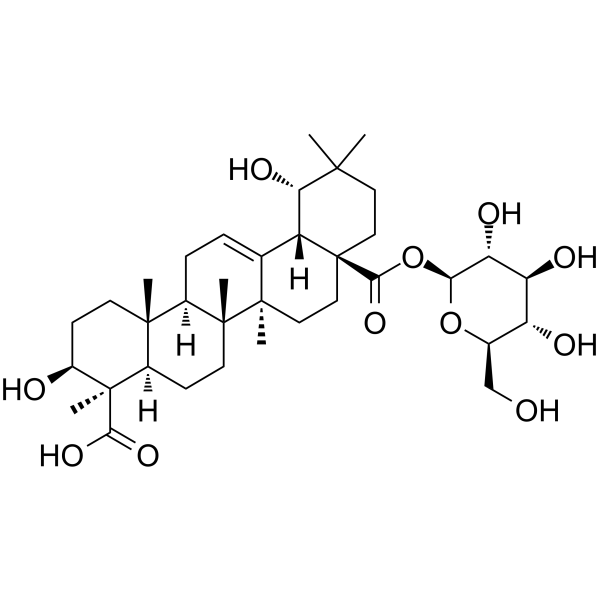
Ilexhainanoside D is the main triterpenoid saponin extracted from Ilex hainanensis Merr., and the combination of Ilexhainanoside D and ilexsaponin A1 has anti-inflammation effect .
loading...
    loading...
Cat. No.: HY-N3015
CAS No.: 21586-90-3
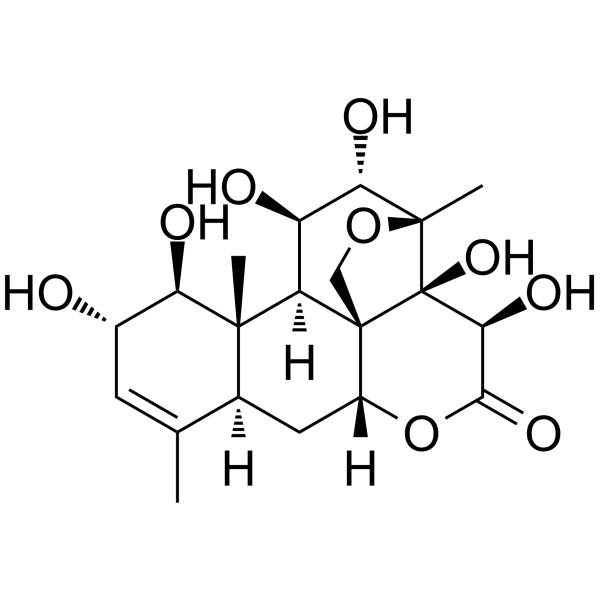
Bruceine E is a quassinoid from seeds of Brucea javanica (L.) Merr, exhibiting hypoglycemia effect . Bruceine E exhibits blood glucose lowering effect in both nondiabetic mice and Streptozotocin (STZ (HY-13753))-induced diabetic rats at lower dose .
loading...
    loading...
Cat. No.: HY-N3484
CAS No.: 478158-77-9
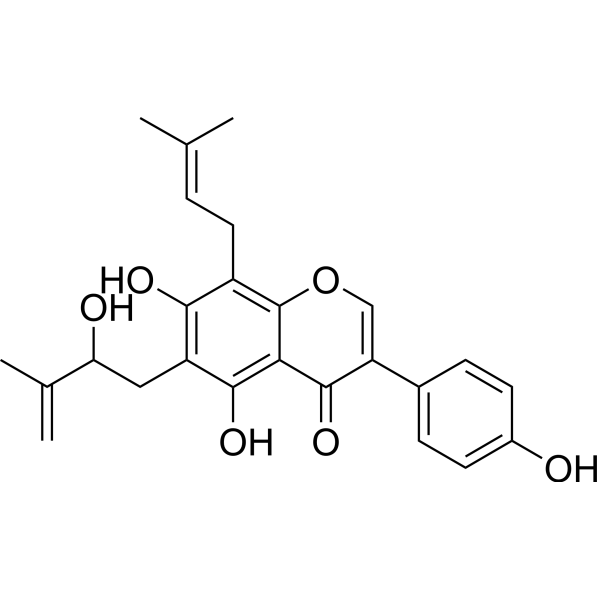
Isoerysenegalensein E (compound 3) is a natural product that can be found in Erythrina lysistemon .
loading...
    loading...
Cat. No.: HY-N2857
CAS No.: 34086-50-5
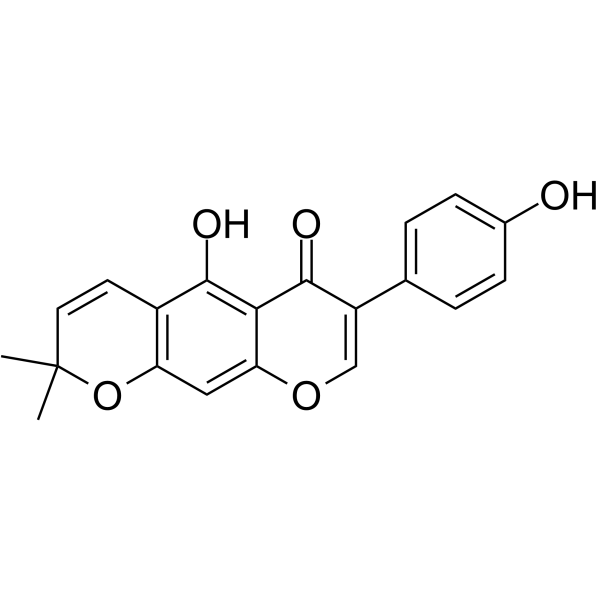
Alpinumisoflavone (compound 2) is a flavonoid derivative isolated from the stem bark of Erythrina lysistemon Hutch .
loading...
    loading...
Cat. No.: HY-N11166
CAS No.: 7741-47-1
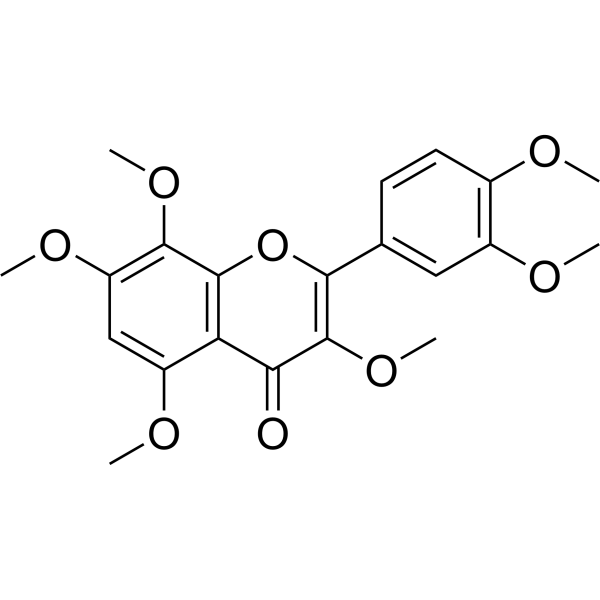
3,5,7,8,3′,4′-Hexamethoxyflavone is a flavonoid. 3,5,7,8,3′,4′-Hexamethoxyflavone can be isolated from the leaves of Melicope triphylla MERR .
loading...
    loading...
Cat. No.: HY-N9709
CAS No.: 90686-12-7
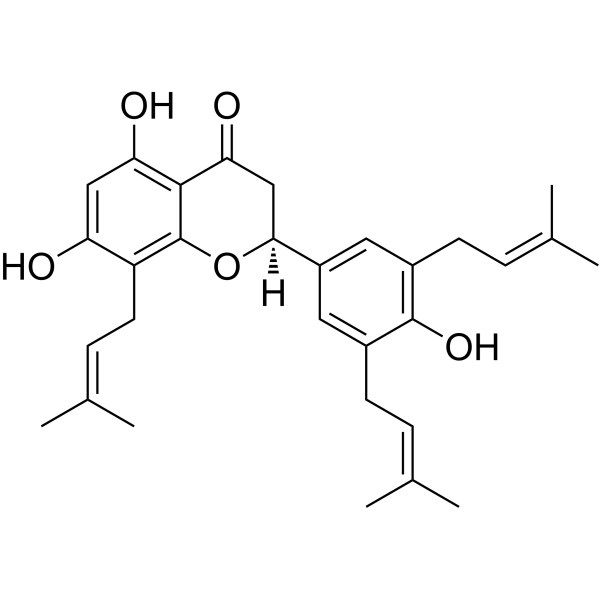
5-Hydroxysophoranone is a flavanone that can be isolated from the Erythrina subumbrans. 5-Hydroxysophoranone shows weak antibacterial activity against several strains of Streptococcus .
loading...
    loading...
Cat. No.: HY-N2906
CAS No.: 119309-02-3
Synonyms: Atalantoflavone
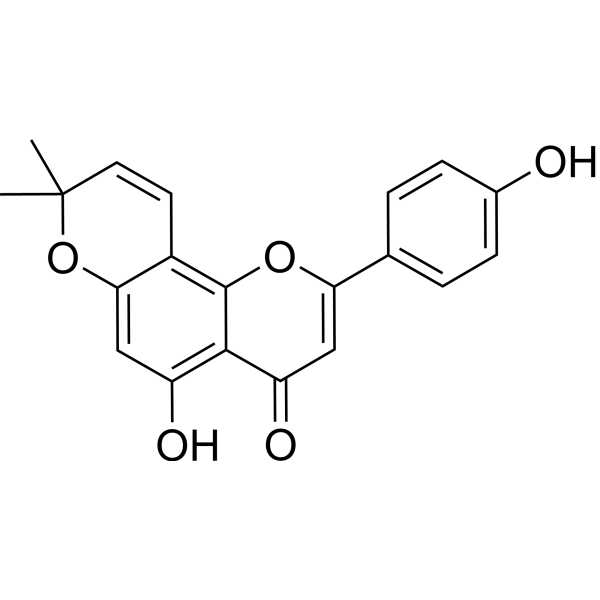
Limonianin (Atalantoflavone) is a flavone, that can be isolated from Erythrina sigmoidea and the root bark of Citrus limonia. Limonianin presents inhibitory effect against P. gingivalis. Limonianin shows cytotoxic activity against multidrug-resistant (MDR) cancer cell lines .
loading...
    loading...
Cat. No.: HY-N10482
CAS No.: 96552-83-9
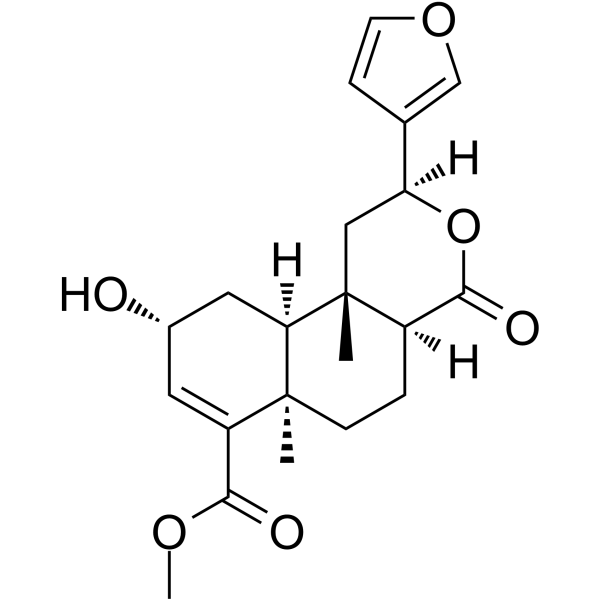
Tinophyllol, a furanoditerpenoid, is a natural product found in Arcangelisia flava MERR. Tinophyllol has good activity against Botrytis cinerea .
loading...
    loading...
Cat. No.: HY-N3642
CAS No.: 74515-47-2
Synonyms: Erythrabyssin I; Erythrabissin I
Cristacarpin can be extracted from the stem bark of Erythrina suberosa, promotes endoplasmic reticulum (ER) stress, leading to sublethal reactive oxygen species (ROS) production and ultimately cell death through senescence .
loading...
    loading...
Cat. No.: HY-N8265
CAS No.: 77263-11-7
Abyssinone V is a prenylated flavonoid with predicted anti-viral activity. Abyssinone V can be isolated from the stem bark of Erythrina melanacantha. Abyssinone V possesses good pharmacodynamics properties. Abyssinone V is predicted to be antivirals including anti-herpes (HSV) agent, with mechanisms comprising inhibition of polymerase, ATPase and membrane integrity .
loading...
    loading...
Cat. No.: HY-NP066
Synonyms: ECL
Erythrina Cristagalli Lectin (ECL) is a plant lectin that can be used as a probe to specifically bind biomolecules (such as polysaccharides, peptides, etc.).Erythrina Cristagalli Lectin (ECL) is a biological material or organic compound that can be used in life science research .
loading...
    loading...

